Türkçe
 English
 Deutsch

Having a large amount of content on a website does not mean the site has strong topical authority in search engines. If the content is disconnected, similar search intents are spread across different pages, and important pages take many clicks to reach, your content investment may not deliver the organic visibility you expect.
Topic clusters and information architecture solve this problem at two different levels:
- A topic cluster determines which content should be created around a topic and how it should be linked together.
- Information architecture determines how that content is categorized, positioned and presented to users within the site.
When implemented correctly, these two structures help users find the information they are looking for more easily, help search engines better understand the relationships between pages, and help the business gain stronger visibility on strategic topics.
What Is a Topic Cluster?
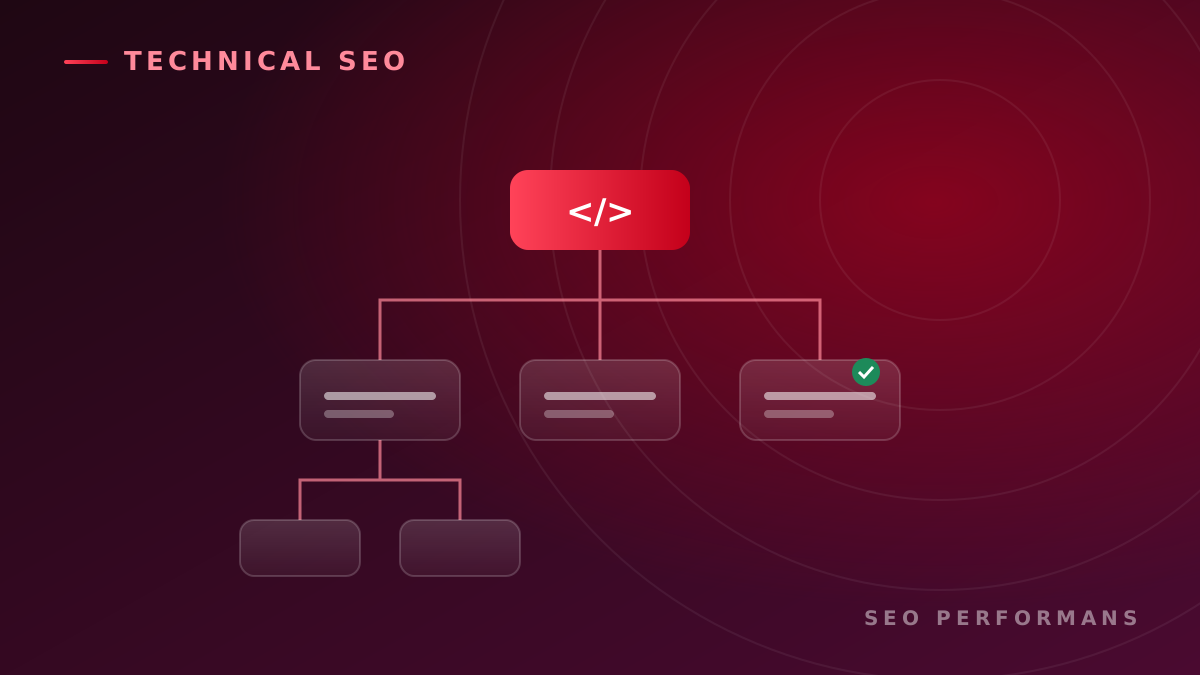
A topic cluster is a content model made up of a central page that explains a broad main topic and supporting content that covers the subtopics in detail.
A typical topic cluster includes three components:
- Pillar page: The central page that covers the main topic comprehensively
- Cluster content: Pages that focus on subtopics and more specific search intents
- Internal links: Links that establish context between the pillar and cluster pages
For example, if "Technical SEO" is chosen as the main topic, the following structure can be built:
- Technical SEO Guide — pillar page
- What is crawl budget?
- How to optimize an XML sitemap
- How to use the canonical tag
- JavaScript SEO issues
- Core Web Vitals optimization
- How to perform log analysis
These pieces of content are not simply grouped under the same category. Each page links to the main guide and to other relevant supporting content at the points where it genuinely helps the user.
As a result, instead of independent articles, you get a knowledge network that systematically covers a specific topic area.
What Is Information Architecture?
Information architecture is the organization of a website's content so that users can understand it, search engines can crawl it, and it stays aligned with the business's goals.
Information architecture is not just menu design. It covers all of the following elements:
- Page hierarchy
- Category and subcategory structure
- URL structure
- Navigation
- Breadcrumb usage
- Internal links
- Content classification
- Filter and tag pages
- The paths users follow through the site
Google uses links to discover new pages and understand the relationships between them. For this reason, it is not enough for an important page to appear only in the XML sitemap. The page should also receive meaningful links from other accessible parts of the site.
A well-designed information architecture lets users easily find answers to these three questions:
- Where am I right now?
- What related information can I reach from here?
- What should my next step be to reach my goal?
The Difference Between Topic Clusters and Information Architecture
Although topic clusters and information architecture are related, they are not the same concept.
| Area | Topic cluster | Information architecture |
|---|---|---|
| Core focus | Topic coverage and semantic relationships | Site-wide organization and access |
| Main unit | Pillar and cluster content | Categories, URLs, menus and page hierarchy |
| Question it answers | What content should we create? | Where and how should we position this content? |
| SEO contribution | Topical depth and search intent coverage | Crawlability, discoverability and internal authority distribution |
| User contribution | Comprehensive answers to related questions | Information that is easy to find and understand |
A topic cluster is part of the content strategy, while information architecture is part of the structure that supports that strategy. If one is missing, the impact of the other is limited.
For example, a cluster made up of strong content may fail to generate organic performance because of a flawed category structure or weak internal linking. Similarly, a site hierarchy that looks flawless cannot build topical authority if there is not enough content that satisfies search intents.
Why Should Businesses Use the Topic Cluster Model?
It makes topical coverage visible
Producing just one general piece of content on a topic may not be enough to meet users' different information needs. The cluster model lets you address the main topic together with the different search intents across the awareness, consideration and decision stages.
It makes content production plannable
A topic cluster turns the content calendar from a list of random keywords into a strategic plan. The team can see why each piece of content is being created, which main page it supports and what role it plays in the user journey.
It provides a natural framework for internal linking
Because the pages in a cluster share a common topical context, links can be built naturally. These links make it easier for users to move to related content and for search engines to understand the relationships between pages.
Google also notes that descriptive, contextually relevant anchor text helps users and search engines understand the target page.
It reduces content overlap
Creating many pages that target similar queries can cause visibility problems known as keyword cannibalization. When a separate primary search intent is defined for each URL during cluster planning, this risk decreases.
How to Build an Advanced Topic Cluster
1. Define the business goal
The cluster topic should not be chosen based on search volume alone. The topic needs to be related to the business's services, area of expertise and conversion goals.
You can start with these questions:
- In which service or product group do we want to gain visibility?
- What are the core problems of users researching this service?
- What questions are users looking to answer before making a decision?
- Which content can provide a natural transition to a sales or quote page?
2. Classify search intents
Grouping keywords based only on word similarity is not enough. Queries that contain the same word can have different result expectations.
Queries are generally evaluated by these intents:
- Informational
- Comparative
- Commercial investigation
- Transactional
- Navigational
For example, although "what is SEO analysis?" and "free SEO analysis" look similar, they do not represent the same need. The first query is closer to learning information, while the second is closer to using a service or tool.
3. Analyze the search results
Before building a cluster, the search results for the target queries should be reviewed. If Google shows the same page types for similar queries, this may indicate that those queries can be combined into a single piece of content.
During the analysis, look at the following:
- Which page types stand out in the results?
- Does the same URL rank for multiple queries?
- Do users expect a guide, category, service or tool page?
- Which subquestions are not covered by competitors' content?
This work prevents unnecessary page creation and search intent overlap.
4. Define the scope of the pillar page
A pillar page does not have to explain every subtopic down to the finest detail. Its job is to present the main topic as a whole in an understandable way and to direct the user to the detailed content they need.
A good pillar page:
- Explains the core concepts of the topic.
- Covers the important subtopics.
- Provides contextual links to the cluster content.
- Provides a natural transition to the commercial page without forcing it.
- Has a structure that can be updated regularly.
5. Design the URL and category architecture
The URL structure should be short, consistent and manageable. A physical folder is not necessarily required for every topic cluster; what matters is making the relationship between pages clear through navigation, breadcrumbs and internal links.
Example structure:
/seo/
/seo/teknik-seo/
/blog/tarama-butcesi/
/blog/canonical-etiketi/
/blog/javascript-seo/
Alternatively, all content can be grouped under a topic folder:
/teknik-seo/
/teknik-seo/tarama-butcesi/
/teknik-seo/canonical-etiketi/
/teknik-seo/javascript-seo/
Both models can work. When choosing, consider the existing URL structure, the size of the site, the content management system and future scale.
It is not right to change existing, high-performing URLs just to achieve a tidier URL appearance. If a URL change is necessary, redirects, canonicals, the sitemap and internal link updates should be planned together.
6. Create the internal link map
Internal linking is not just adding a "related content" section at the end of every post. Links should be placed within the body content, at the moment the user encounters the related concept.
The basic model can be set up as follows:
- All cluster content links to the pillar page.
- The pillar page links to the important cluster content.
- Directly related cluster content is cross-linked.
- Suitable pages within the cluster provide a transition to the relevant service page.
- No orphan pages are left behind.
Anchor text should describe the target page instead of vague phrases like "click here." However, mechanically repeating the same keyword in every link also creates an unnatural pattern.
7. Prepare content briefs at the URL level
The following information should be defined for each page:
- Primary search intent
- Main and supporting queries
- Target user profile
- The core question the content will answer
- Recommended heading structure
- The pillar and cluster pages it will link to
- Conversion goal
- The unique value that will set it apart from competitors
This approach prevents content creators from repeating the same topics and prevents multiple pages from competing for the same query.
What to Look for in an Information Architecture Audit
Click depth
Strategic pages should be reachable from the homepage or from strong category pages. It is not possible to move every page just one click away; however, commercially important URLs should not be forgotten in the deep layers of the architecture.
Orphan pages
Pages that receive no links within the site are considered orphan pages. Even if they appear in the sitemap, they are in a weak position for both users and crawlers.
Orphan pages can be identified by comparing site crawl data, the XML sitemap, Google Search Console and landing pages in analytics tools.
Internal link distribution
Pages that receive a lot of internal links should be compared with pages that receive almost none. The number of links alone is not a sufficient quality metric; the context of the pages the links come from and their importance in the site hierarchy should also be evaluated.
Faceted navigation and filter URLs
On e-commerce and listing sites, filters can generate thousands of similar URLs. This can cause crawl resources to be directed to low-value pages and lead to clusters of duplicate content.
Which filters can be indexable should be determined by considering real search demand, whether the page offers unique value, and whether it contains enough products or results.
Breadcrumb and navigation consistency
Breadcrumbs help users understand their position within the hierarchy. It is important that the visual breadcrumb and the structured data reflect the same logic, and that pages are linked to a consistent parent category within the site.
How to Measure Topic Cluster Performance
Evaluating topic cluster success only through individual keyword rankings gives incomplete results. Measurement should be done at the cluster level.
The key indicators you can track are:
- Organic clicks and impressions across the cluster
- Variety of queries the cluster ranks for
- Number of pages indexed for the first time
- URLs that are not indexed or are crawled but not selected
- Internal links received by pillar and cluster pages
- The rate of transition from organic entries to service pages
- Form start and form completion rates
- Visibility changes on the commercial pages being supported
- Behavior of new and returning organic users
When evaluating, pages should be examined not on their own but together with the topic cluster they belong to. Even if a subtopic page generates limited traffic, it can contribute to the understanding of the pillar page, the coverage of long-tail queries, or users reaching the conversion page.
Common Mistakes
Treating a topic cluster as just a tag page
Adding the same tag to pieces of content does not create a topic cluster on its own. An editorial and semantic connection must be established between the pages.
Creating a separate page for every keyword
Producing separate pages for minor keyword differences can lead to content overlap. Page decisions should be made based on search intent and results page overlap, not on the keyword.
Pointing all links to the pillar page
The cluster model is not one-directional. The relationships between subtopic content should also be built according to the user journey.
Creating new content without analyzing old content
Before creating a new page, you should check whether existing content needs to be updated, merged or repositioned.
Measuring success by traffic alone
High traffic does not always mean commercial value. The impact of content on qualified visits, transitions to service pages and analysis requests should also be measured.
How Does SEO Performans Approach the Topic Cluster and Information Architecture Process?
A successful topic cluster project is more than preparing a keyword list. The existing content inventory, organic performance, site structure, user intents and the business's commercial goals must be evaluated together.
At SEO Performans, the process may include the following work:
- Compiling the existing content and URL inventory
- Building search intent and keyword clusters
- Identifying pillar and cluster opportunities
- Detecting content overlap
- Making merge, update and new content decisions
- Evaluating the category, URL and breadcrumb structure
- Preparing the internal link map
- Reviewing technical indexing risks
- Setting up a cluster-based performance tracking model
The goal is not to publish more content, but to position the right content within the right architecture and increase organic visibility and commercial contribution in a sustainable way.
Conclusion
A topic cluster turns the topics a business is expert in into systematic content clusters. Information architecture ensures that these clusters can be easily discovered by users and search engines.
In an effective model, content strategy, technical SEO and user experience are not handled separately. Search intents are mapped to the right pages, important URLs are strengthened within the architecture, and users are guided naturally from searching for information to requesting a service.
Would you like to find out which topic clusters should be built on your website, whether your existing content is competing with itself, and how information architecture affects organic performance?
Request a Free SEO Analysis
Let's evaluate your current site structure, your content clusters and your organic growth opportunities together.
Frequently Asked Questions
Do topic clusters directly improve SEO rankings?
A topic cluster alone is not a ranking guarantee. However, organizing related content logically can help improve coverage, strengthen internal links and help users reach the information they need.
How many pieces of content should a topic cluster contain?
There is no fixed number. The amount of content should be determined by the scope of the topic, search intents and the business's area of expertise. Instead of creating unnecessary pages, the goal should be for each URL to meet a distinct and useful need.
Can a pillar page and a service page be the same?
In some cases they can; however, the core purposes of the two pages are different. A pillar page mostly provides information, while a service page focuses on conversion. If the search results point to two different intents, using separate pages may be more appropriate.
Can old content be included in a topic cluster structure?
Yes. In fact, you should take an inventory of existing pages before creating new content. Suitable content can be updated, merged and brought into the cluster structure with new internal links.
How long does it take to see topic cluster results?
The timeframe varies depending on the site's existing authority, technical condition, level of competition, content quality and crawl frequency. For this reason, instead of committing to a fixed timeframe, indexing, visibility and conversion indicators should be monitored regularly.