Türkçe
 English
 Deutsch
Web performance is no longer measured simply by whether a page loads. Today, users expect websites that are fast, smooth, and stable. With that expectation in mind, Google has made user experience one of its direct ranking criteria.
This is where Core Web Vitals come in.
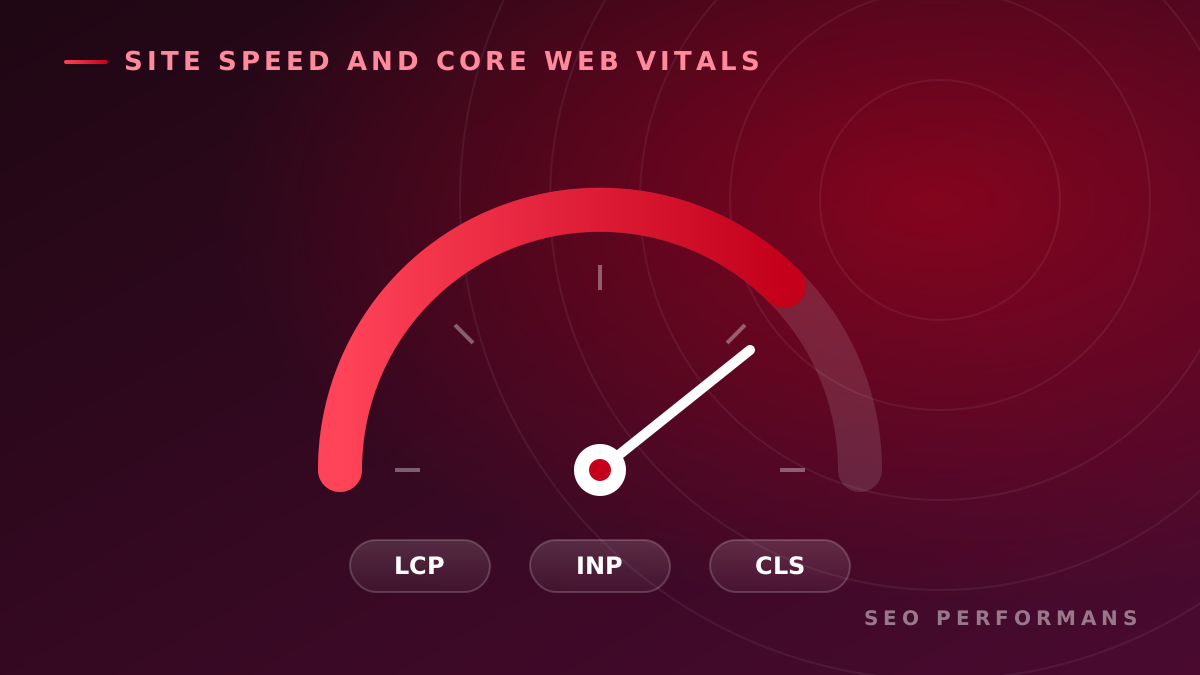
Core Web Vitals are a set of metrics that measure page load speed, user interaction, and visual stability. For high-traffic corporate websites, e-commerce platforms, and SaaS projects in particular, these metrics are critical not only for SEO but also for conversion rates, user satisfaction, and brand trust.
In this guide, we will take a detailed look at the LCP, INP, and CLS metrics that apply as of 2025, along with how to measure them and how to optimize for them.
What Are Core Web Vitals?
Core Web Vitals are performance metrics defined by Google that focus on measuring user experience.
These metrics measure three core areas:
- Loading performance
- Interaction speed
- Visual stability
Google treats these metrics as the standard indicators of user experience.
In modern SEO strategies in particular, Core Web Vitals optimization has become one of the fundamental parts of technical SEO work.
Core Web Vitals Metrics
LCP (Largest Contentful Paint)
LCP measures the time it takes for the largest content element on the page to become visible on the user's screen.
The following elements typically affect:
- Hero images
- Large banner areas
- Heading blocks
- Video poster images
the LCP metric.
Google's Recommended Values
- Good: 2.5 seconds or less
- Needs improvement: 2.5 – 4 seconds
- Poor: More than 4 seconds
INP (Interaction to Next Paint)
INP measures how long it takes for the page to visually respond after a user interaction.
This metric analyzes user actions such as:
- Button clicks
- Form interactions
- Menu openings
- JavaScript-based operations
and similar interactions.
Google's Recommended Values
- Good: 200 ms or less
- Needs improvement: 200 – 500 ms
- Poor: More than 500 ms
CLS (Cumulative Layout Shift)
CLS measures unexpected content shifts that occur while a page is loading.
For example, the following can cause:
- Late-loading images
- Dynamic ad slots
- Font swaps
- Media without defined dimensions
CLS problems.
Google's Recommended Values
- Good: 0.1 or less
- Needs improvement: 0.1 – 0.25
- Poor: More than 0.25
Why Are Core Web Vitals Important for SEO?
Google considers user experience among its ranking criteria.
Thanks to Core Web Vitals optimization:
- Organic visibility can increase
- Bounce rate can decrease
- Time on page can increase
- Conversion rates can improve
However, it is important to remember that Core Web Vitals are not a substitute for quality content.
For the best results, the following should be considered together:
- High-quality content
- Technical SEO
- Performance optimization
- User experience
as a whole.
Professional technical SEO optimization work plays a major role in this process.
How Are Core Web Vitals Measured?
Google PageSpeed Insights
It is one of the most widely used tools.
It provides both lab data and real-user data.
Lighthouse
It lets you run performance analysis through Chrome DevTools.
It is especially useful for developers.
Google Search Console
With the Core Web Vitals report, you can see the following in detail:
- Mobile performance
- Desktop performance
- Problematic URLs
- Group-level performance issues
in detail.
Chrome User Experience Report (CrUX)
It is a Google data source that analyzes real user behavior.
It is extremely valuable for enterprise-scale sites.
How to Optimize LCP
Optimize Your Images
- Use WebP or AVIF format
- Prefer responsive images
- Compress your images
Reduce Server Response Time
TTFB (Time to First Byte) needs to be low.
To achieve this, the following are important:
- Using a CDN
- Server-side caching
- Optimized hosting infrastructure
for this purpose.
Prioritize Critical Content
Above-the-fold content should load as quickly as possible.
Hero areas and main images in particular can be optimized with preload.
How to Optimize INP
Reduce JavaScript Load
Heavy JavaScript operations delay user interactions.
For this reason, the following are necessary:
- Code splitting should be applied
- Unnecessary scripts should be removed
- Third-party services should be minimized
to keep interactions responsive.
Using Async and Defer
Non-critical scripts should be deferred with defer or async.
Relieve the Main Thread
Long-running JavaScript tasks should be broken up and handled in the background.
How to Optimize CLS
Define Image Dimensions
Width and height values should be defined on all img tags.
Reserve Space for Dynamic Areas
Space should be reserved in advance for ad slots or iframe content.
Optimize Font Loading
Using font-display: swap can help reduce layout shifts.
Avoid Dynamic Content in Top Areas
Content that loads later in the header and hero areas in particular can cause serious CLS problems.
Core Web Vitals Strategy for Corporate Websites
On corporate websites, Core Web Vitals are not merely a technical metric.
This optimization is directly tied to:
- UX (User Experience)
- CRO (Conversion Rate Optimization)
- SEO performance
- Brand trust
and more.
For this reason, the following teams:
- Software teams
- Marketing teams
- SEO specialists
- UX designers
should work together.
For example, while the marketing team analyzes conversion rates, the development team should optimize page performance.
Core Web Vitals and Content
If high-quality content is backed by a poorly performing infrastructure, the user experience can suffer.
For this reason, content strategy and performance optimization should be planned together.
When professional content optimization work and technical performance improvements move forward together, you achieve far stronger SEO results.
Conclusion
Core Web Vitals sit at the center of modern web performance and SEO strategies.
Optimizing the LCP, INP, and CLS metrics:
- Creates faster websites
- Improves user experience
- Strengthens SEO performance
- Increases conversion rates
- Supports brand trust
As of 2025, user expectations are higher and competition is stronger than ever.
For this reason, Core Web Vitals optimization should be seen not merely as a technical detail but as a fundamental part of your digital growth strategy.