Türkçe
 English
 Deutsch
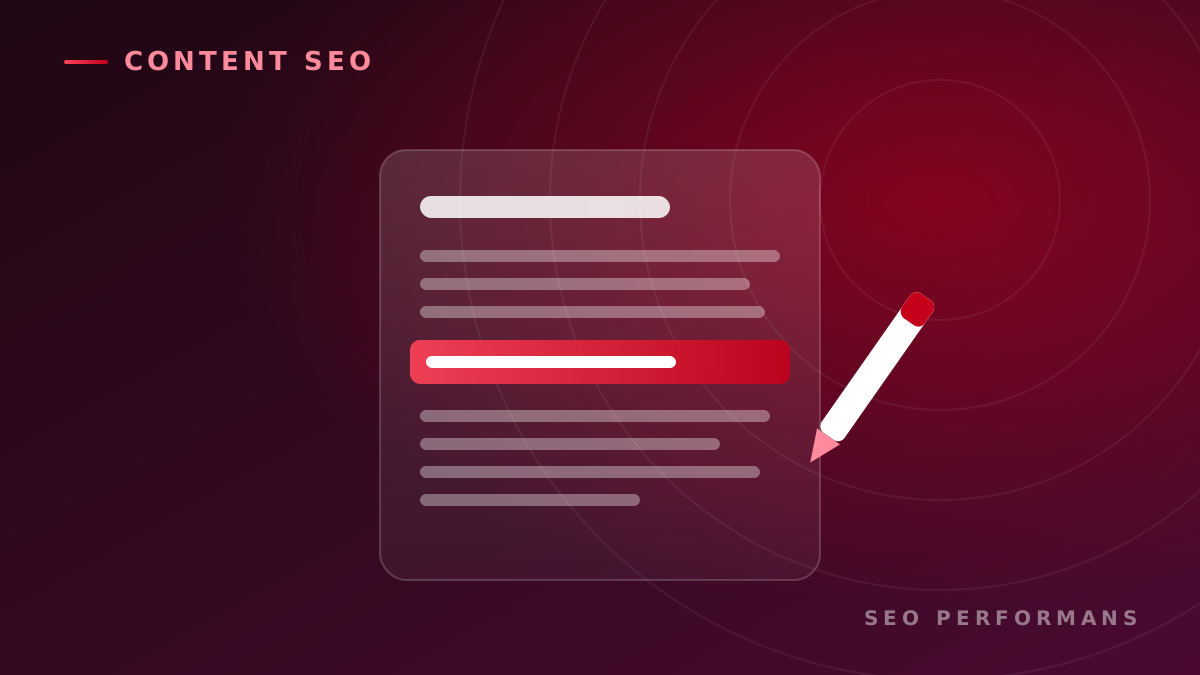
Businesses that want to rank high on Google often focus on technical SEO, site speed, or backlink work. But there is a far more critical element at the core of search engine optimization: content SEO. Google's main goal is to give users the most accurate, most useful, and most reliable information. That is why quality content is one of the strongest building blocks of SEO success.
Content SEO is not just about adding keywords to a piece of writing. It means creating content that understands the user's search intent, answers their questions clearly, is highly readable, and delivers real value. A successful content strategy should be supported by the right topic selection, a solid heading structure, proper keyword usage, internal links, and up-to-date information.
Why Is Content SEO Important?
When a user searches on Google, they are really looking for an answer to a question or a solution to a problem. For example, the search "What is SEO?" is aimed at gaining basic knowledge, while the search "How to do SEO?" is more focused on implementation. This is where the most critical point of content SEO comes into play: analyzing search intent correctly.
If your content does not meet the user's expectations, it becomes difficult to achieve lasting rankings no matter how technically sound your page is. Google considers content more valuable when it benefits the user, explains the topic clearly, and matches search intent.
How Does Google Evaluate Content Quality?
When evaluating content, Google does not look only at keyword density. Many signals indirectly affect SEO performance, such as the time a user spends on the page, how they read the content, whether they move on to other pages, and whether they leave quickly.
If a user lands on a page and leaves within seconds, the content may not be meeting their expectations. But if the user reads the content, browses different headings, and moves on to other pages on the site, that is a strong signal that the content is useful.
What to Watch for in a Successful Content SEO Effort
When creating SEO-friendly content, heading hierarchy, paragraph structure, readability, and topic depth are all very important. Disorganized, long, and hard-to-read content weakens the user experience. That is why content should be organized with H1, H2, and H3 headings, supported by short paragraphs, and deliver information without tiring the reader.
Topic depth should also be built into the content. Instead of surface-level information, comprehensive articles that provide the answers users actually need perform better in SEO. Among the many pieces of content published on the same topic, Google wants to surface the most useful and most comprehensive one.
Internal Link Structure Strengthens Content SEO
The links built between pieces of content, in other words the internal link structure, are very valuable for both user experience and SEO. Thanks to well-planned internal links, users can easily reach related service, blog, or guide pages.
For example, linking from a blog post about content SEO to pages on content optimization, search engine optimization, or keyword analysis strengthens the flow of authority within your site.
Content SEO Requires Consistency
Content SEO is not a one-time effort. To achieve lasting success on Google, content needs to be updated regularly, supported with new information, and adapted to changing search trends. Updating old content is just as valuable as producing new content.
In highly competitive industries in particular, regular content production increases a brand's digital authority. A content network that grows stronger over time can deliver more organic traffic, better rankings, and higher conversion rates.
Conclusion: Valuable Content Is the Foundation of SEO
Content SEO is one of the most important factors in ranking on Google. Technical SEO and backlink work support the process, but lasting success is hard to achieve without strong, useful, user-focused content.
If your goal is not just to get traffic but to reach the right users and turn that traffic into customers, you need to plan your content strategy professionally. If you want to be visible on Google, you must first create value for the user. Because even when algorithms change, quality content keeps on winning.