Türkçe
 English
 Deutsch
Your website's visitor numbers may be growing. But are those visits coming from the right audience? Which pages generate customer inquiries? What technical issues are limiting your organic visibility?
Answering these questions takes an evaluation that goes beyond rank tracking.
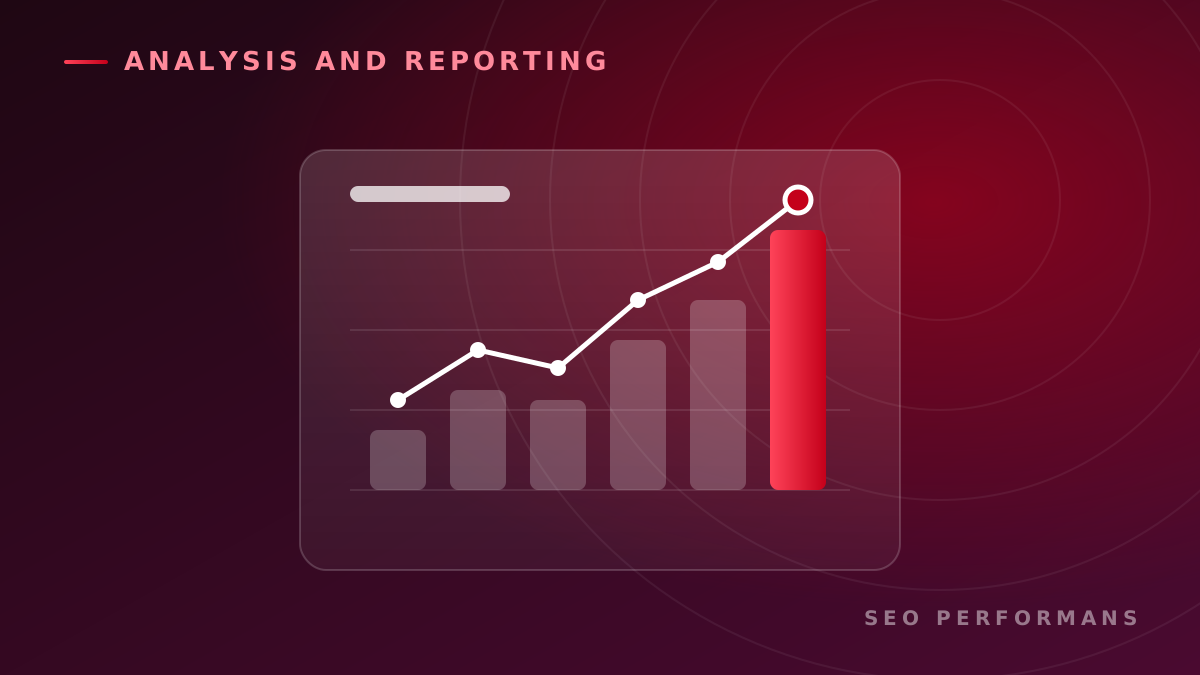
SEO analysis and reporting is the process of examining a website's organic search performance, technical health, and contribution to business goals in order to produce actionable decisions. Analysis identifies problems and opportunities. Reporting presents the findings along with priorities, owners, and the metrics to track.
A good SEO report should not only answer "How much did traffic change?" It should also answer "Where did the change happen, what are the likely causes, and what should we do now?"
What Is SEO Analysis?
SEO analysis is the work of evaluating how discoverable your website is in search engines and how well it matches the searches you are targeting.
The scope can vary depending on the size of the site, its industry, and its goals. The following areas are typically reviewed together:
- Technical accessibility and indexing.
- Search queries and organic visibility.
- How well the content meets user needs.
- Site structure and internal links.
- Competitors' positions in search results.
- Leads or sales generated by organic visits.
The purpose of analysis is not just to produce a list of errors. Determining which intervention could be most valuable for the business is also part of the work.
What Is SEO Reporting?
SEO reporting is the clear presentation of analysis results and completed work at regular intervals.
A report should clearly answer three questions:
- What changed? Movements in visibility, traffic, and conversions.
- How should it be interpreted? Findings, likely causes, and data limitations.
- What will be done? Priority tasks, owners, and success criteria.
The number of charts does not determine the quality of a report. A report is more useful when it helps management make decisions and helps the implementation team understand what to do.
What Do SEO Analysis and Reporting Give Businesses?
Helps Allocate Resources to Priority Work
Not every technical warning has the same impact. An access issue on an important service page can be addressed before a cosmetic flaw on a low-priority page.
Analysis sets priorities by weighing the potential impact, the implementation effort, and the scope of the problem together.
Guides Content Investment
You can identify which content is attracting interest, which pages fail to meet the targeted search intent, and which topics are missing.
This assessment helps you make a more informed choice between producing new content and improving existing pages.
Connects Organic Traffic to Business Results
A blog post may get many visits while generating few leads. A service page with fewer visits may bring in high-quality inquiries.
That is why traffic volume, the purpose of the page, and the business outcome it generates should be evaluated together.
What Is Examined in a Comprehensive SEO Analysis?
1. Technical SEO Status
A technical review checks whether important pages are accessible and configured correctly.
Examples of areas to check include:
- HTTP status codes and redirects.
- Indexing preferences and access blocks.
- Canonical and hreflang relationships.
- XML sitemaps.
- Mobile usability and page performance.
- Internal links and orphan pages.
Every finding should be explained with examples of affected URLs. Instead of saying "there is a redirect issue," showing where the problem occurs and which user flow it affects makes implementation easier.
2. Search Queries and Visibility
This step examines which searches users use to reach the site. Queries can be grouped into categories such as branded searches, non-branded searches, informational intent, and service purchase intent.
For example, an increase in queries containing the brand name may be related to the brand becoming better known through other channels. Rather than interpreting this increase directly as overall SEO success, it should be evaluated together with non-branded visibility.
3. Content and Landing Pages
This step evaluates which need each page answers and whether it moves the visitor to a suitable next step.
The following questions can be used in the review:
- Does the page answer the targeted question sufficiently?
- Do the title and the content match each other?
- Is the information up to date and easy to understand?
- Are the purposes of similar pages distinct enough?
- Can the user reach the relevant service or supporting content?
4. Competitor and Content Opportunities
The sites you compete with in search results may differ from your business competitors. You may compete with another business for a service query and with an industry publication for an informational query.
Competitor analysis should be used to compare content formats, the subtopics covered, and the value offered to the user. The goal is not to repeat a competitor's content but to identify an unmet need.
5. Conversions and Lead Quality
Actions such as form submissions, purchases, or appointment bookings should be matched with business goals.
Clicking a phone number is not the same outcome as a completed call. Similarly, viewing a form page does not mean a successful submission. Measurement needs to represent the step the user actually completes.
Which Metrics Should an SEO Report Include?
Search Visibility Metrics
Google Search Console provides data on clicks, impressions, click-through rate, and average position. These metrics should be evaluated with breakdowns such as query, page, device, and country. Google Search Console performance report
| Metric | What it tells you | How to interpret it |
|---|---|---|
| Impressions | The volume of the site's appearances in search results | Together with relevant queries and target markets |
| Clicks | The clicks coming from search results | By page and query groups |
| Click-through rate | The ratio of clicks to impressions | Together with position, query intent, and result appearance |
| Average position | The average position calculated across impressions | Not as a single, fixed ranking |
A change in average position is not by itself an indicator of success or failure. A site that starts appearing for new queries may receive more clicks while having a lower average position. Google also recommends focusing on click and impression trends rather than tracking position alone. Google's performance evaluation recommendations
On-Site Behavior and Business Results
With Google Analytics 4, you can evaluate organic sessions and the actions that matter to the business. The user, session, and event scopes used in reports should be kept separate, because they answer different questions. GA4 traffic source scopes
Metrics you can track depending on the business:
- Sessions from organic search.
- Successful analysis or quote requests.
- The share of sessions that generate a lead.
- The number of qualified leads.
- Leads that convert into sales.
- E-commerce revenue and orders.
The attribution model in GA4 reports can affect how credit for key events is distributed across channels. For this reason, the model and measurement definition used in the report should be kept constant, or any changes should be explained. Google Analytics attribution model explanation
Why Can Search Console and Analytics Data Differ?
You should not expect clicks in Search Console to exactly match sessions in Analytics.
The two tools measure different stages and use different measurement methods. In addition, the organic search channel in Analytics can include search engines other than Google. Measurement setup, user consent, and report settings can also make a difference.
When comparing, check the date range, time zone, property scope, and traffic source filters. Google's guide to using Search Console and Analytics data together
Instead of changing the numbers to close these gaps, use each data source for the question it can answer.
How to Interpret a Sample SEO Report
Let's assume we are comparing two periods of equal length for a service business:
| Metric | Previous period | Current period | Change |
|---|---|---|---|
| Organic sessions | 10.000 | 12.000 | 20% increase |
| Organic sessions with at least one successful analysis request | 200 | 180 | 10% decrease |
| Lead-generating session rate | 2% | 1,5% | 0.5 percentage point decrease |
This table shows that an increase in traffic is not enough on its own. However, it does not explain why the number of leads dropped.
The possibilities to investigate include:
- Does most of the increase come from informational blog visits?
- Has traffic to service pages declined?
- Is there a technical problem with the mobile form?
- Has the measurement system or consent management changed?
- Do the new visitors match the targeted country and customer group?
This example is hypothetical; it is not a SEO Performans client result or a performance guarantee.
A good report does not present possibilities as findings. It first defines the hypotheses to be checked, then produces data-driven decisions.
Common Mistakes in SEO Reporting
Looking Only at Total Traffic
The total number can hide a drop on service pages or a loss in a specific country. The report should be broken down into meaningful groups such as page type, device, country, and query intent.
Comparing Different Periods Without Context
The number of days in a month, seasonality, and campaigns can change results. In addition to the previous-period comparison, look at the same period last year when appropriate.
Attributing Every Change to the SEO Work Done
Changes in demand, brand campaigns, site updates, and measurement issues can all affect organic data. Two events that happen one after the other do not by themselves establish a cause-and-effect relationship.
Treating Tool Scores as the Ultimate Success Measure
A higher score in a crawling tool can be a useful technical improvement. However, the impact of that change on important pages, users, and business results should be evaluated separately.
Not Providing an Action Plan
General recommendations such as "titles should be improved" are insufficient for implementation. The report should state which page will be changed, for what reason, and with which success criteria.
How to Prepare an SEO Report: Step by Step
An SEO report earns its value less by bringing data together than by making it actionable. You can prepare a monthly SEO report with the following steps:
- Define the goal and the reader. Is the report going to management, the marketing team, or developers? Each reader wants a different level of detail.
- Fix the period and the comparison. Compare against the previous period and, if there is seasonality, the same period last year; make sure the period lengths are equal.
- Collect and validate the data. Pull data from Search Console, Google Analytics 4, and crawling tools; check whether there have been changes in measurement setup or consent management.
- Break the change down into segments. Examine total traffic by page type, query group, device, and country to find where the change happened.
- Prioritize the findings. Rank each finding by expected impact, reliability of the evidence, and implementation effort.
- End with an action plan. For each priority task, write the owner, the target date, and how success will be measured.
To get a quick starter report on your site's technical health, you can use our free SEO site analysis tool; the tool also generates a shareable report link.
How to Structure a Good SEO Report
A report that makes decisions easier can include the following sections:
| Section | Content |
|---|---|
| Executive summary | The most important changes and the decisions that need to be made |
| Goals and measurement definitions | Tracked metrics, data sources, and scope |
| Performance review | Period-over-period changes and meaningful breakdowns |
| Technical and content findings | Evidence, affected pages, and potential impact |
| Completed work | Changes made and verification status |
| Priority actions | Owner, target date, and success criteria |
| Data limitations | Missing measurement, setup changes, or uncertainties |
When prioritizing, expected impact, the reliability of the finding, and implementation effort should be considered together.
For example, a verified access issue affecting important service pages can take precedence over a minor edit to a piece of content that gets little traffic.
Tools Used to Prepare an SEO Report
No single tool answers every question. A reliable SEO report uses different data sources together:
| Tool | What it is used for in the report |
|---|---|
| Google Search Console | Impressions, clicks, average position, queries, indexing status, and Core Web Vitals reports |
| Google Analytics 4 | Organic sessions, engagement, conversions, and landing page performance |
| Looker Studio | Combining Search Console and GA4 data in a single dashboard and building a recurring report template |
| PageSpeed Insights | Page speed and user experience metrics such as LCP, INP, and CLS |
| Site crawlers | Broken links, redirects, duplicate titles, canonical and indexability issues |
| Keyword and competitor tools | Rank tracking, search volume estimates, and the queries where competitors are visible |
Tool scores and estimated metrics should be used to indicate direction; the ultimate success measure is the contribution of organic traffic to business results.
How to Tailor an SEO Report to the Reader
The same data should be presented differently to different readers:
- Executive summary: No longer than one page; organic-driven leads, revenue or potential customer contribution, key risks, and topics that require a decision.
- Marketing team: Query groups, content performance, landing pages, and new content opportunities.
- Technical team: Lists of affected URLs, error types, steps to reproduce, and how to verify the fix.
It is not necessary for everything to be in a single file; a shared summary with appendices split by reader is often more practical.
How Often Should SEO Analysis and Reporting Be Done?
Reporting frequency should be set according to how fast the site changes and the needs of the business.
A monthly review can provide a strategic tracking cadence for many businesses. More frequent checks are needed in situations such as critical technical changes, site migrations, or sudden traffic loss.
Short-term checks should be used to detect problems, while longer-term reviews should be used to understand trends and business results. In periods with little data, avoid interpreting small numerical changes as major gains or losses.
Frequently Asked Questions
What Is the Difference Between SEO Analysis and an SEO Report?
Analysis examines data to identify problems and opportunities. A report presents those findings, period results, and the work to be done in a clear way.
What Access Is Needed for an SEO Analysis?
A preliminary technical review can be done using publicly accessible pages. To evaluate organic performance and conversions, you need appropriate access to Search Console, Analytics, and, where necessary, customer lead data. Shared access should be limited to what is needed.
Is SEO Success Measured by Rankings Alone?
Rankings are one part of the evaluation. Business goals such as relevant visitors, qualified leads, and sales should also be tracked.
Does Doing an Analysis Increase Traffic?
Analysis sets the direction for the work to be carried out. Results depend on the implementation of the recommendations, competition, content quality, and other conditions. Preparing a report alone does not increase traffic.
How Do You Get a Free SEO Report?
You can review your site's technical SEO status, page speed, and basic content signals for free with our SEO Site Analysis tool and save the result as a shareable report. A report covering organic traffic and conversion data requires access to Search Console and Analytics.
What Should a Monthly SEO Report Include?
An executive summary, a period-over-period performance comparison, query- and page-level breakdowns, technical and content findings, completed work, and next month's priority actions. Each section should answer the questions "What changed, why did it change, and what should we do now?"
How Long Should an SEO Report Be?
What matters is not length but how well it supports decisions. For most businesses, a one-page summary plus detailed appendices reviewed when needed is enough.
Turn Your Data into Actionable Decisions with SEO Performans
The core topic addressed in SEO Performans' SEO Analysis and Reporting service is the relationship between your site's current visibility and your business goals. Evaluating technical findings, content opportunities, and organic performance data together makes it possible to set priorities more clearly.
To determine which areas of your website need improvement and which pages deserve a closer look, start with your existing data.
To interpret the key metrics in your reports correctly, you can also read our article on how to measure SEO performance. If you would like to manage the process together, from auditing to regular reporting, take a look at our SEO audit and reporting service.